
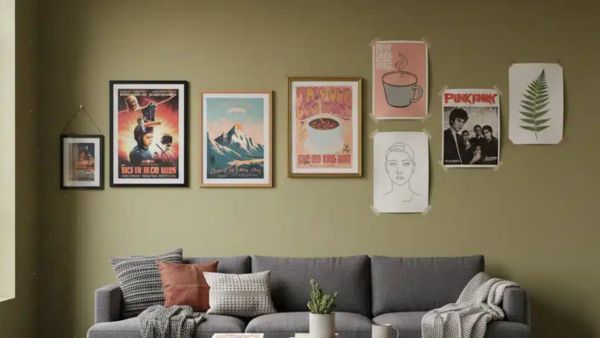
Whether you’re jazzing up a dorm room, sprucing up your living room, or curating a mini home gallery, posters are an easy and affordable way to add personality. But one big question often comes up: should you frame that poster or leave it unframed? There are real pros and cons to each.
On the one hand, a well-chosen frame can “add a touch of elegance and protection” to your artwork. On the other hand, a bare poster can lend a casual, artsy vibe and cost less. We’ll break down the key differences so you can decide what fits your style and needs.
Aesthetic Vibe: Polished vs. Playful
A framed art poster on the wall adds a polished, gallery-like feel to this modern living space. In general, framed posters create a more polished, refined look, while unframed posters feel relaxed and informal. For example, one decorating blog observes that “framed posters feel more refined and permanent,” whereas unframed ones “offer a more relaxed, creative vibe”.
Another style guide puts it similarly: framed prints give a “traditional, classic, and polished” aesthetic, while unframed prints bring “a modern, minimalist appeal”.
In practice, this means that a large framed poster can easily become a formal focal point (think high-end gallery), whereas a cluster of posters taped or clipped to the wall feels casual and dynamic. (Even mix-and-match can work: many decorators layer framed and frameless art together for contrast.)
Cost and Budget
A big practical difference is price. A frame adds another piece of decor (and material) onto the poster. According to one art print retailer, “framed prints typically involve a higher upfront investment due to the cost of materials…unframed prints are usually more budget-friendly”.
In plain terms, that means an identical print might cost 2–3× more if you pay for a frame. For students or tight budgets, leaving a poster unframed can save a lot of cash. (You might then use that savings on multiple posters or better-quality paper.) Of course, the flip side is that a framed poster is basically “ready to hang,” so you’re paying for convenience and a finished look as well.
Durability and Protection
Frames do double-duty as decoration and protection. A good frame (especially with glass or acrylic glazing) shields your poster from dust, spills, and sunlight. As one guide notes, this is “especially important for posters that feature valuable or sentimental prints”.
In other words, if you have a poster of Grandma’s painting or a collectible print, framing it will help preserve it. Fracture’s blog puts it bluntly: framed prints “provide added protection against dust, moisture, and physical damage,” while unframed prints are “more vulnerable” and require extra care. In day-to-day terms, a framed poster just needs the occasional dusting of its frame, whereas an unframed poster can wrinkle, tear, or fade faster unless you handle it carefully (and possibly laminate it for a basic shield).
Portability and Flexibility
If you like moving things around or you’re planning to move apartments, portability matters. Bare posters are lightweight and roll up easily – perfect for shuffling from dorm to dorm or swapping artwork by season. Frames, on the other hand, add bulk and weight. Fracture’s table of comparisons warns that framed pieces tend to be “heavier and bulkier, making them harder to hang or move”.
So if you know you’ll be redecorating often or hauling art to new places, unframed posters (or simple frame-less display methods) can save you a lot of hassle. The tradeoff is that frameless art can sometimes look less finished, but it offers maximum flexibility: lean posters on a shelf, clip them to a board, or swap them out in seconds.
Hanging and Setup
How will you get your poster on the wall? Framed posters often come with hanging hardware built in (nails, wires, sawtooth hangers), so you literally just hammer in a nail and go.
As one poster guide puts it, framed prints “are ready to hang and can be easily mounted on your wall without additional framing or matting”.
- Unframed posters require a bit more creativity. In a rental or dorm where you can’t drill holes, many people use adhesive solutions: e.g. Command™ strips, mounting tape, or poster putty.
- Laboo Studio’s decorating advice lists options like magic tape, double-sided tape, mounting putty, adhesive strips or poster clips for damage-free hanging.
- For example, removable strips or washi tape can securely hold up a poster and come off cleanly.
- You can also use simple binder clips or a poster rail (wooden hanger bars) to clamp the top of a print and hang it like a sheet – this gives some structure without a formal frame.
- (Just remember: heavier framed pieces should still go on a proper hook or wall anchor for safety.)
Customization and Style Options
If you do decide to frame, the sky’s the limit on style.
- Frames come in countless materials (wood, metal, molded plastic) and colors.
- A thick wood frame adds warmth, a slim black frame adds drama, and a floating white frame makes colors pop.
- In fact, one decorating blog points out that the frame itself can “complement the design and style of your room”.
- You can also add a mat board around the poster inside the frame to give it a gallery look or adjust how the art is centered.
- The nice thing about framing is you can repaint or swap out frames later to refresh the look.
Even if you’re going frameless, you can get creative: use matching wooden poster rails for a minimalist hang, try decorative washi tape as a faux-border, or pin posters to a corkboard backing.
Another trick is lamination: a clear laminate film can strengthen a poster and even enhance its colors, acting as a bit of insurance when you forego glass. Overall, framing offers more finishing touches, but leaving it unframed means the poster itself takes center stage and you can still play with easy DIY displays.
In Student or Dorm Rooms
For college dorms and rentals, the decision often comes down to budget and wall rules. Dorms are tiny and shared, so cheap and lightweight decor is key. Guides to dorm decor often list posters as a top choice because they’re inexpensive and pack a personality punch.
Many students simply tape up unframed posters or use clothespins on a string of lights. Removable strips and washi tape are dorm-favorite hacks for a no-damage display. If you really want a framed look on a college budget, slim black or wood frames from a craft store can work—just use Command strips instead of nails. The bottom line: posters are tailor-made for dorms – pick art you love, then hang it however works with your room rules. You’ll save money and security deposit!
In Living Rooms and Shared Spaces
In a more permanent living room or family room, either option can look great depending on your style. Formal living spaces and home offices often lean framed – a nicely framed poster or print adds a touch of class next to your sofa or bookshelf. Framed art is easy to integrate into a gallery wall or align over furniture. If you prefer a refined, put-together vibe, framing gives that “finished” appearance. That said, casual common areas (like a TV room, game room, or kitchen wall) can be very fun with unframed art.
A collage of posters in coordinating colors (taped or pinned up) gives a creative, energetic feel. Modern and minimalist decor especially suits frameless prints. As Fracture summarizes, framed prints shine in “traditional, classic” interiors, while frameless pieces are ideal for “modern, minimalist” rooms. In short: match your décor. A formal gallery-style bedroom might call for moldings and mats, whereas a relaxed family den might welcome bold unframed posters.
For Art Collectors and Galleries
If you’re working with valuable art or want a museum-quality presentation, frames usually win. Galleries never hang precious prints on tape – they use proper frames, often with UV-protective glass and archival mats. Even for posters, framing them essentially turns them into collectible art pieces.
A framed poster can stand shoulder-to-shoulder with paintings on a wall. According to one print service, framed works have a “timeless and sophisticated look” that adds structure to any space. Unframed prints, by contrast, “embrace a modern, minimalist aesthetic.” In other words, collectors who value preservation will typically frame their posters. The extra effort (and cost) goes a long way to preserve color and prevent warping.
Conclusion: Which Should You Choose?
Ultimately, there’s no one-size-fits-all answer. If you want a refined, polished look and maximum protection, framed posters are the way to go.
They are ready to hang and make any room feel more “finished.” But if you need budget-friendly flexibility (think dorm life, frequent moves, or a playful vibe), unframed posters have a lot to offer. They are lighter, cheaper, and easy to swap out. In fact, some stylists note that “framing adds polish, but unframed posters can look great too—especially when styled well”.
Here’s a quick comparison summary:
- Framed Posters: Polished and protective – frames guard your print and give a professional look. Expect higher cost and more weight, but enjoy “ready-to-hang” convenience.
- Unframed Posters: Casual and creative – they fit any style and are easy on your wallet. They require more careful handling (no glass protection) and creative hanging (tape, clips, etc.) but offer maximum flexibility.
In the end, think about your space and priorities. Do you want something permanent and protective, or fun and changeable? Either way, both framed and unframed posters can look fantastic with the right styling. Pick the option that suits your space and personality – you really can’t go wrong as long as you hang it with care